Retail Strip Mall Roof Replacement in Gwinnett County
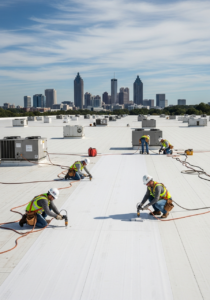
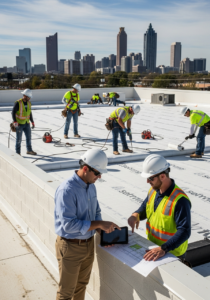
Finding a reliable retail strip mall roof replacement contractor in Gwinnett County can feel overwhelming when you’re managing tenant concerns, protecting your investment, and keeping daily operations running smoothly. When your commercial roof starts failing, every leak disrupts a tenant, every construction delay affects foot traffic, and every miscommunication damages your reputation with businesses counting on you. Managing a retail strip mall in Gwinnett County means balancing tenant satisfaction, property value, and operational costs every single day—and those challenges multiply fast when roofing problems emerge. Pro Roofing & Siding has completed commercial roofing projects across Metro Atlanta’s busiest retail corridors, and we approach every strip mall replacement with one goal: keeping your tenants operational and your investment protected. Whether you own a single strip center in Duluth or manage a portfolio of retail properties along the I-85 corridor, this guide covers everything you need to know about replacing your commercial roof while maintaining business continuity.

Why Gwinnett County Retail Properties Need a Specialized Strip Mall Roofing Contractor
Gwinnett County has transformed into one of Metro Atlanta’s most active retail markets. The I-85 corridor from Duluth through Lawrenceville sees thousands of shoppers daily, and strip malls along these routes represent significant real estate investments. This growth creates strong demand for commercial roofing services that understand the unique pressures retail property owners face. A retail strip mall roof replacement contractor in Gwinnett County must navigate complex tenant relationships, coordinate around business hours, and deliver quality workmanship that protects your property for decades. Property owners who choose the right strip mall roofing contractor Gwinnett communities trust can avoid costly mistakes that less experienced contractors often make on multi-tenant commercial buildings.
Strip malls present roofing challenges that single-tenant commercial buildings simply don’t have. Your roof spans multiple tenant spaces, each with different HVAC loads, roof penetrations, and operational schedules. A restaurant generates more exhaust and heat than a dry cleaner. A hair salon runs different hours than an insurance office. Your roofing contractor must account for all of this during replacement planning. The best strip mall roofing contractor Gwinnett property owners can hire will conduct thorough assessments of each tenant space before creating a comprehensive installation plan. This detailed approach ensures that rooftop equipment, drainage patterns, and structural considerations receive proper attention before work begins.
Georgia’s weather patterns hit flat commercial roofs particularly hard. Summer temperatures regularly exceed 95 degrees, causing membrane expansion and contraction that stresses seams over time. Spring and summer storms bring hail and high winds that damage aging roofing systems. Heavy rainfall during Georgia’s wet seasons tests drainage systems and membrane integrity. These conditions mean a strip mall roof in Gwinnett County often deteriorates faster than identical buildings in milder climates, making it essential to work with a contractor who understands regional weather challenges. The combination of UV exposure, thermal cycling, and moisture intrusion creates a demanding environment that requires roofing systems specifically engineered for Southern climate conditions.
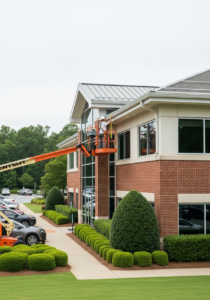
Curb appeal matters enormously for retail properties. A roof replacement project with debris scattered across your parking lot, workers blocking storefronts, and construction vehicles taking up customer spaces can drive shoppers to competitors. Shopping center roofing Gwinnett County projects require contractors who treat your property like the revenue-generating asset it is. Professional commercial roofers maintain clean job sites, coordinate parking logistics, and minimize visual disruption throughout the project timeline. Your tenants depend on customer traffic for their livelihoods, and a thoughtful approach to project management protects their businesses while your roof gets replaced.
Signs Your Strip Mall Roof Needs Replacement vs Repair
Deciding between repair and full replacement affects your budget, your tenants, and your property’s long-term value. Understanding the warning signs helps you make the right call before small problems become expensive emergencies. Many retail center roof repair Georgia property owners request could actually signal the need for complete replacement, especially when multiple issues appear simultaneously across different sections of the building. A qualified commercial roofing professional can assess your roof’s overall condition and help you understand whether targeted repairs will extend its service life or simply delay an inevitable replacement.
Persistent leaks affecting multiple tenant spaces signal systemic failure, not isolated damage. When you’re patching leaks in one suite while water intrusion appears in another, your membrane has likely failed across large sections. Continued repairs become a money pit that delays the inevitable replacement while damaging tenant relationships. If your maintenance team addresses the same leak locations repeatedly, or if new leaks appear shortly after repairs, your roof has reached the end of its serviceable life. Track your repair expenses over the past three to five years—when annual repair costs approach 30% or more of replacement costs, you’re likely better served by investing in a new roof rather than continuing to patch an aging system.
Walk your roof quarterly and look for these visual indicators of membrane failure:
- Bubbling or blistering across the membrane surface indicating moisture trapped beneath
- Visible seam separation on TPO or EPDM roofing where heat welds or adhesives have failed
- Cracks or alligatoring on modified bitumen surfaces showing UV degradation
- Membrane shrinkage pulling away from flashings and penetrations
- Rust stains or corrosion around metal flashings and edge details
- Soft or spongy areas when walking the roof indicating saturated insulation
- Granule loss on modified bitumen or built-up roofing revealing underlying layers
- Flashing separation at parapet walls, curbs, or equipment penetrations
Rising energy costs across tenant units often indicate insulation breakdown beneath your membrane. When wet or compressed insulation loses R-value, HVAC systems work harder to maintain comfortable temperatures. If multiple tenants complain about increasing utility bills or inconsistent temperatures, your roof’s thermal performance has degraded. Insulation replacement during a roof project can dramatically improve energy efficiency throughout your strip mall. Modern insulation materials offer significantly better thermal performance than products installed 15 or 20 years ago, meaning a roof replacement project provides an opportunity to upgrade your building’s overall energy performance.
Roof age combined with visible ponding water creates an urgent replacement timeline. Flat roofs over 15-20 years old that hold standing water more than 48 hours after rain are prime candidates for replacement rather than repair. Ponding water accelerates membrane deterioration, adds structural weight stress, and breeds biological growth that further damages roofing materials. A qualified commercial flat roof replacement Atlanta contractor can assess whether your drainage issues can be corrected during replacement. Adding tapered insulation or cricket systems during replacement can eliminate ponding problems that have plagued your building for years.
Professional Roof Inspection Benefits for Commercial Properties
Professional commercial roof inspections provide documentation that supports insurance claims, capital planning, and tenant communications. During a comprehensive inspection, qualified technicians examine membrane condition, flashing integrity, drainage function, and penetration sealing across every section of your roof. This detailed assessment identifies problems invisible from ground level and provides photographic documentation of current conditions. Infrared moisture scanning can reveal wet insulation beneath intact membrane surfaces, identifying hidden damage that visual inspection alone cannot detect.
Regular inspections also establish baseline conditions that prove valuable when storm damage occurs. If you can demonstrate your roof’s condition before a hail event or windstorm, insurance adjusters have clear evidence supporting replacement claims. Property owners who invest in annual professional inspections typically achieve better claim outcomes and catch developing problems before they cause tenant disruptions. Inspection reports become part of your property’s maintenance record and demonstrate responsible ownership practices to potential buyers, lenders, and insurance underwriters.
Commercial property managers should schedule professional inspections twice annually—once in spring before severe weather season and again in fall after summer storms have passed. These inspections cost a fraction of emergency repair bills and provide peace of mind knowing your roof’s condition is documented and monitored. An experienced retail strip mall roof replacement contractor in Gwinnett County can provide inspection services and maintenance recommendations that extend your existing roof’s lifespan while helping you plan for eventual replacement.
Best Roofing Systems for Retail Strip Mall Roof Replacement Contractor Gwinnett County Projects
Selecting the right membrane system affects your maintenance costs, tenant comfort, and roof longevity for decades. Each material offers distinct advantages for Gwinnett County’s commercial properties. Working with an experienced retail strip mall roof replacement contractor in Gwinnett County ensures you receive recommendations tailored to your specific building, tenant mix, and budget requirements. The material you choose should account for your building’s structural capacity, rooftop equipment loads, and long-term ownership plans.

| Roofing System | Lifespan | Best For | Cost Range (per sq ft) |
|---|---|---|---|
| TPO | 20-30 years | Energy efficiency, UV resistance | $7-10 |
| EPDM | 20-25 years | Budget-conscious owners, proven durability | $6-9 |
| Modified Bitumen | 15-20 years | Heavy HVAC equipment, foot traffic | $8-12 |
| PVC | 25-30 years | Chemical exposure, restaurants | $9-14 |
TPO roofing retail buildings Atlanta property owners increasingly choose has become the dominant option for Gwinnett County retail properties. Its white reflective surface bounces solar heat rather than absorbing it, reducing cooling costs during Georgia’s intense summers by up to 30% compared to dark membranes. TPO’s heat-welded seams create watertight bonds that outperform adhesive-applied systems in our climate. The material resists punctures, tears, and biological growth while maintaining flexibility across temperature extremes. For strip malls prioritizing long-term energy savings and minimal maintenance, TPO delivers excellent value. Many shopping center roofing Gwinnett County projects now specify TPO as the default membrane choice due to its proven performance record and favorable lifecycle costs.
EPDM rubber roofing offers proven durability at lower material costs. This black membrane has a 50-year track record in commercial applications and handles Georgia’s temperature swings without cracking or splitting. For property owners prioritizing initial cost savings, EPDM provides reliable protection. However, its dark color absorbs more heat than white membranes, potentially increasing cooling costs for tenant spaces. EPDM works well for strip malls where rooftop equipment provides significant shade or where energy costs represent a smaller concern than upfront investment. White EPDM coatings can be applied to improve reflectivity, though this adds maintenance requirements over the roof’s lifespan.
Modified bitumen works exceptionally well for strip malls with heavy rooftop HVAC equipment. Its multiple-layer construction handles foot traffic from maintenance personnel better than single-ply membranes. The redundancy of multiple waterproofing layers provides additional protection around penetrations where leaks commonly develop. Our Lawrenceville roofing contractor team frequently recommends modified bitumen for properties requiring regular roof access or supporting heavy equipment loads. This system also performs well in areas where rooftop grease exhaust or chemical exposure might degrade single-ply membranes over time.
PVC membranes excel in environments with chemical exposure, making them ideal for strip malls with restaurant tenants. Grease exhaust and cooking oils can degrade TPO and EPDM over time, but PVC resists these substances while providing the same heat-welded seam strength as TPO. The higher material cost pays dividends for properties where food service represents a significant portion of the tenant mix. PVC also offers excellent fire resistance and maintains flexibility even after decades of UV exposure, making it a premium choice for property owners focused on long-term performance rather than initial cost savings.
Minimizing Tenant Disruption During Commercial Roof Replacement
Your tenants signed leases expecting functional, quiet business environments. A poorly managed roof replacement can trigger complaints, rent disputes, and even lease breaks. Pro Roofing & Siding structures every strip mall project around business continuity, recognizing that shopping center roofing Gwinnett County projects must protect tenant relationships while delivering quality installation. Our project management approach treats your tenants as stakeholders in the project’s success, not obstacles to work around.
Phased installation allows businesses to remain fully operational throughout your project. Rather than tearing off the entire roof simultaneously, we work in sections. One area undergoes replacement while adjacent sections remain intact and watertight. This approach extends project timelines slightly but eliminates the risk of widespread interior damage if weather interrupts work. Each phase completes fully before crews move to the next section, ensuring continuous waterproof protection across your entire building. Phasing also reduces daily noise impact on any single tenant, spreading construction activity across the building footprint rather than concentrating it in one area for extended periods.
Night and weekend scheduling options suit noise-sensitive retail environments. Medical offices, spas, and professional services can’t function with roofing crews working overhead during business hours. We coordinate crew schedules around tenant operating hours to minimize disruption. Early morning material deliveries, adjusted break schedules, and noise-intensive work during low-traffic periods all contribute to maintaining normal business operations below. For retail centers with restaurants or entertainment venues open late, we can adjust schedules to begin work after their closing hours and complete before morning business traffic arrives.
Communication protocols matter as much as construction quality. Your property manager receives daily progress reports documenting completed work, upcoming activities, and any schedule adjustments. Tenants get advance notice of overhead work affecting their space. Parking coordination ensures customer spaces remain accessible during material deliveries. These details separate professional commercial contractors from companies that treat strip malls like residential jobs. We establish clear communication channels before work begins and maintain consistent contact throughout the project, ensuring all stakeholders stay informed and concerns get addressed promptly.
Weather contingency planning protects your tenants from leaks during extended projects. We maintain emergency tarping materials on-site and monitor forecasts continuously. If storms approach, exposed sections get temporary waterproofing within hours. Our crews understand that a single leak into a retail space can damage inventory, disrupt operations, and strain your tenant relationship—so we plan proactively rather than reacting to weather emergencies. Material staging and sequencing ensures we never expose more roof area than we can protect or complete within a reasonable weather window.
Retail Strip Mall Roof Replacement Contractor Gwinnett County Cost Guide
Commercial roof replacement represents a significant capital expenditure. Understanding cost factors helps you budget accurately and evaluate contractor bids fairly. As an experienced retail strip mall roof replacement contractor in Gwinnett County, Pro Roofing & Siding provides transparent pricing that accounts for all project variables. We believe property owners deserve detailed proposals that explain exactly what they’re paying for and why costs vary between projects.
TPO roof replacement in Gwinnett County typically ranges from $7-12 per square foot fully installed. A 20,000 square foot strip mall roof would cost $140,000-240,000 depending on project complexity. This range accounts for membrane quality, insulation specifications, and installation difficulty. Commercial flat roof replacement Atlanta property owners invest in should include comprehensive warranties, quality materials, and experienced installation crews—all factors reflected in professional pricing. Beware of bids significantly below this range, as they often indicate inferior materials, inadequate insurance coverage, or inexperienced crews that create long-term problems.
Several factors push costs toward the higher end of estimates:
- Complete tear-off and disposal of existing roofing materials versus overlay installation
- Insulation upgrades to meet current energy codes and improve R-value
- High penetration counts from multiple HVAC units requiring custom flashing
- Difficult access requiring crane lifts for materials due to building height or site constraints
- Phased installation schedules extending project duration to minimize tenant disruption
- Premium membrane thickness or manufacturer-specific warranty requirements
- Structural repairs needed to decking or supports discovered during tear-off
- Extensive parapet wall reconstruction or edge metal replacement
- Code-required upgrades to drainage systems or roof access points
Multi-building strip mall portfolios often qualify for volume pricing. Property owners replacing roofs on several centers simultaneously can negotiate better rates on materials and reduce mobilization costs. Our Duluth roofing services team works with property management companies on multi-site projects throughout Gwinnett County, delivering consistent quality across all properties while maximizing budget efficiency. Coordinating multiple projects also allows for more efficient crew scheduling and material purchasing, savings we pass along to property owners managing larger portfolios.
Insurance claims may substantially offset replacement costs for storm-damaged roofs. Hail and wind damage from Georgia’s severe weather events often warrants full replacement coverage. The next section covers insurance claims in detail and explains how professional documentation supports successful claims.

Insurance Claims for Storm-Damaged Retail Roofs in Gwinnett County
Gwinnett County retail properties sustain storm damage regularly during spring and summer severe weather season. Hail, high winds, and falling debris can damage commercial roofs severely enough to warrant insurance claims. Navigating the commercial claims process requires documentation, expertise, and persistence. Property owners handling retail center roof repair Georgia insurance claims benefit significantly from contractor support throughout the process. The complexity of commercial claims exceeds residential claims substantially, and working with an experienced contractor can mean the difference between a denied claim and full replacement coverage.
Proper damage documentation strengthens your claim significantly. After any significant storm, arrange for a professional inspection before contacting your insurance company. Our storm damage restoration team photographs all damage, measures affected areas, and prepares detailed reports that adjusters require for approval. This documentation establishes the connection between specific storm events and the damage present on your roof, supporting your claim for full replacement rather than limited repairs. We use GPS-tagged photographs, drone imagery for large roof areas, and detailed measurement drawings that meet insurance industry documentation standards.
Commercial insurance claims differ from residential claims in complexity and documentation requirements. Adjusters evaluating strip mall roofs expect professional damage assessments, material specifications, and detailed scope documents. Working with a contractor experienced in roof insurance claim assistance streamlines approvals and reduces claim denials. Our team understands the specific documentation formats, terminology, and processes that commercial adjusters expect. We prepare estimates using Xactimate software that adjusters recognize and can import directly into their systems, reducing processing delays and miscommunication.
Pro Roofing & Siding coordinates directly with commercial insurance adjusters throughout the claims process. We meet adjusters on-site for inspections, provide supplemental documentation when initial estimates fall short, and advocate for full replacement when damage warrants it. Our goal is ensuring your claim covers the work your property actually needs. We’ve helped property owners recover hundreds of thousands of dollars in storm damage claims across Metro Atlanta’s commercial properties. Our experience with major insurance carriers means we understand their processes, documentation requirements, and negotiation approaches.
Policy review matters before filing claims. Commercial property policies vary widely in coverage terms, deductible structures, and depreciation calculations. Understanding your specific policy helps set realistic expectations for claim outcomes. We recommend reviewing your policy annually with your insurance agent and ensuring coverage limits reflect current replacement costs for your building. Some policies include code upgrade coverage that pays for required improvements during replacement, while others specifically exclude such costs—knowing your policy details before a claim arises prevents unpleasant surprises.
Choosing the Right Commercial Roofing Contractor in Gwinnett County
Selecting a commercial roofing contractor for your strip mall requires more due diligence than hiring a residential roofer. The stakes are higher, projects are more complex, and mistakes affect multiple businesses. A qualified strip mall roofing contractor Gwinnett property owners select should demonstrate specific commercial experience, proper credentials, and clear communication capabilities. Take time to evaluate multiple contractors thoroughly before making this significant investment decision.
Verify manufacturer certifications before signing any contract. GAF Master Elite certification indicates a contractor meets strict installation standards and can offer enhanced warranty coverage. Manufacturer certifications matter because they ensure your roof’s warranty remains valid if problems develop later. Certified contractors receive ongoing training on current installation techniques and material specifications, ensuring your roof benefits from best practices throughout the project. Ask contractors which manufacturer certifications they hold and verify those certifications directly with manufacturers before proceeding.
Request references from similar retail projects in Metro Atlanta. A contractor experienced with strip malls in Duluth, Lawrenceville, Suwanee, Buford, and surrounding Gwinnett County areas understands local building codes, permit requirements, and the specific challenges of retail property construction. Ask references specifically about tenant communication, schedule adherence, and cleanliness during their projects. Speaking with property managers who’ve completed similar projects provides invaluable insight into what working with a contractor actually involves. Request at least three commercial references and follow up with each one to verify the contractor’s claims.
Confirm proper licensing, insurance, and bonding for commercial projects in Georgia. Commercial roofing requires different insurance coverage than residential work. Request certificates of insurance showing general liability coverage adequate for your property value and workers’ compensation coverage for all crew members. Bonding protects you if a contractor fails to complete work or pays subcontractors inappropriately. Never accept verbal assurances—require current documentation before any work begins. Have your insurance agent or attorney review certificates to ensure coverage meets your property’s requirements and your lease obligations to tenants.
Discuss project management approach during your initial consultation. How will the contractor communicate progress? Who is your primary contact for questions? What happens if weather delays the schedule? Clear answers to these questions indicate a contractor prepared for commercial project complexity. Vague responses or hesitation suggests a company more accustomed to simpler residential projects that may struggle with strip mall logistics. The best commercial roofing contractors assign dedicated project managers who serve as single points of contact throughout your project, ensuring consistent communication and accountability.
Why Choose Pro Roofing & Siding for Your Strip Mall Roof Replacement
Pro Roofing & Siding brings Metro Atlanta property owners a combination of commercial expertise, local knowledge, and proven reliability that strip mall owners require. Our 4.8-star rating based on 282+ reviews reflects consistent quality across hundreds of residential and commercial projects throughout Gwinnett, Cobb, and Cherokee Counties. As a trusted retail strip mall roof replacement contractor in Gwinnett County, we understand the unique requirements of multi-tenant commercial properties and structure every project around your success.
Our GAF Master Elite certification places us among the top 3% of roofing contractors nationwide. This certification enables us to offer industry-leading warranty coverage on qualifying commercial installations. For strip mall owners, this means long-term protection backed by both our workmanship and manufacturer guarantees. We maintain this certification through ongoing training, quality standards compliance, and demonstrated customer satisfaction. Our commercial installation crews receive specialized training in TPO, EPDM, modified bitumen, and PVC membrane systems, ensuring expert installation regardless of which material best suits your property.
We understand retail property operations because we’ve completed strip mall projects across Metro Atlanta’s busiest commercial corridors. Our project managers coordinate with property management companies, communicate directly with tenants when appropriate, and structure work schedules around your business priorities. This experience means fewer surprises, smoother projects, and better outcomes for your property and tenants. We’ve developed refined processes specifically for multi-tenant commercial buildings that address the unique challenges these properties present.
Schedule a free inspection to receive a detailed assessment of your strip mall roof’s condition, material recommendations suited to your property, and a transparent proposal covering all project costs. Our commercial team provides thorough evaluations without sales pressure, giving you the information needed to make confident decisions about your property’s roofing needs.
Frequently Asked Questions About Retail Strip Mall Roof Replacement
How long does a strip mall roof replacement take in Gwinnett County?
Most strip mall roof replacements in Gwinnett County take 2-4 weeks depending on building size, weather conditions, and scheduling requirements. A 15,000 square foot roof with standard complexity typically completes in 2-3 weeks with full crews. Phased installations designed to minimize tenant disruption may extend timelines by an additional week. Your retail strip mall roof replacement contractor in Gwinnett County should provide a detailed schedule during the proposal phase that accounts for your specific building and tenant requirements. Factors like rooftop equipment density, access limitations, and tenant schedule restrictions all influence project duration.
Can my retail tenants stay open during a commercial roof replacement?
Yes, tenants can remain open throughout most commercial roof replacements when the project is managed properly. Pro Roofing & Siding uses phased installation approaches, coordinates work schedules around tenant operating hours, and maintains weather protection on open sections. We’ve completed numerous strip mall projects without a single tenant closure. Clear communication and careful scheduling allow businesses to operate normally while roof work proceeds overhead. We work with property managers to identify any tenant-specific concerns before construction begins and develop mitigation strategies tailored to each business’s needs.
What roofing material lasts longest on flat retail buildings in Georgia?
TPO and PVC membranes offer the longest lifespans for flat retail buildings in Georgia, typically 25-30 years with proper maintenance. TPO roofing retail buildings Atlanta property owners install has become the most popular choice for Gwinnett County strip malls due to its excellent UV resistance, energy efficiency, and competitive pricing. Quality installation matters as much as material selection for achieving maximum lifespan—even premium materials fail prematurely when installed incorrectly. Regular maintenance inspections and prompt repair of minor damage help any membrane system achieve its full expected service life.
Will my commercial property insurance cover strip mall roof replacement?
Commercial property insurance typically covers roof replacement when damage results from covered perils like hail, wind, or fallen trees. Age-related deterioration and maintenance neglect are generally not covered. Pro Roofing & Siding provides thorough damage documentation and works directly with adjusters to support valid storm damage claims for our commercial clients. Our experience with commercial insurance processes helps property owners maximize legitimate claim recoveries. We recommend reviewing your policy with your insurance agent annually to ensure you understand coverage terms and limits specific to your roof.
How do I coordinate roof replacement across multiple tenant spaces?
Effective coordination requires clear communication, detailed scheduling, and experienced project management. Pro Roofing & Siding assigns a dedicated project manager to every strip mall replacement. We provide tenants with advance notice of overhead work, coordinate around business-critical hours, and issue daily progress updates to property managers. This structured approach keeps all parties informed throughout the project and addresses concerns before they become problems. Our team can distribute tenant notification letters, attend property manager meetings, and establish direct communication channels for time-sensitive issues during construction.
What warranty coverage should I expect on a commercial strip mall roof?
Quality commercial roof installations should include both manufacturer material warranties and contractor workmanship warranties. GAF Master Elite contractors like Pro Roofing & Siding can offer enhanced warranty programs covering materials and labor for extended periods. Typical commercial warranties range from 15-25 years depending on membrane type and warranty tier selected. Always request written warranty documentation before project completion and understand what maintenance requirements apply. Some warranties require annual professional inspections to remain valid, so factor ongoing inspection costs into your total ownership cost calculations.
Schedule Your Free Commercial Roof Inspection Today
Your strip mall’s roof protects your investment, your tenants’ businesses, and your property’s long-term value. Don’t wait for leaks to damage tenant relationships and trigger expensive emergency repairs. As a leading retail strip mall roof replacement contractor in Gwinnett County, Pro Roofing & Siding offers complimentary commercial roof inspections for property owners and managers throughout Metro Atlanta.
During your free inspection, our commercial roofing specialists will assess your current roof’s condition, identify problem areas requiring attention, and provide honest recommendations on repair versus replacement. You’ll receive a detailed written report documenting our findings along with a transparent proposal if work is needed. This no-obligation assessment gives you the information needed to plan effectively for your property’s roofing needs.
Call Pro Roofing & Siding today at (770) 415-2297 to schedule your free strip mall roof inspection. Our team serves property owners throughout Gwinnett County including Duluth, Lawrenceville, Suwanee, Buford, and surrounding Metro Atlanta communities. Let’s discuss how we can protect your retail investment while keeping your tenants operational.

Free Inspection — No Obligation
Book Your Free Commercial Roof Inspection
Ready to protect your property? Fill out the form and our commercial project team will reach out within one business day to schedule your complimentary inspection — no obligation, no pressure.
- ✓ Licensed & insured commercial roofing crew
- ✓ Detailed written assessment provided
- ✓ Serving Metro Atlanta & surrounding counties