How to File a Commercial Roof Insurance Claim in Georgia
Filing a commercial roof insurance claim in Georgia can feel overwhelming, especially when you’re managing multiple properties or dealing with storm damage that’s disrupting your tenants’ operations. Unlike residential claims, commercial roof claims involve larger dollar amounts, more complex policy language, and stricter documentation requirements that can make or break your settlement. If you don’t know how to file a commercial roof insurance claim in Georgia correctly, you risk leaving thousands of dollars on the table—or having your claim denied entirely.
The good news? With the right process and a qualified commercial roofing contractor in your corner from day one, you can navigate the claims process efficiently and maximize your settlement. This guide walks you through every step, from initial damage documentation to final settlement negotiation. Whether you manage an apartment complex in Marietta, a retail center in Alpharetta, or a warehouse in Gwinnett County, these steps apply to your situation. Pro Roofing & Siding has helped hundreds of Metro Atlanta commercial property owners recover from storm damage, and we’ve seen firsthand what separates successful claims from denied ones.
When to File a Commercial Roof Insurance Claim in Georgia
Not every roof issue warrants an insurance claim. Commercial property insurance typically covers sudden, accidental damage from specific events—not gradual wear or deferred maintenance. Understanding what triggers a valid claim helps you avoid wasted time and potential policy complications.
Covered events in Metro Atlanta typically include:
- Hail damage (common in spring and early summer across Cobb, Cherokee, and Gwinnett Counties)
- Wind damage from severe thunderstorms or tropical weather systems
- Fallen trees or large debris impacting the roof membrane
- Tornado or straight-line wind events
- Fire damage affecting roof structure or materials
Most commercial policies have damage thresholds that must be met before a claim makes financial sense. If your deductible is $10,000 and the damage totals $8,000, filing may not benefit you. However, hidden damage on flat roofs often exceeds initial estimates, which is why professional inspection matters.
Georgia law requires property owners to file claims within a reasonable timeframe—typically one year from the date of damage for most commercial policies, though some policies specify shorter windows. Check your policy’s “duties after loss” section immediately after a storm event. Delaying your claim gives insurers grounds to question whether the damage was storm-related or pre-existing.
Signs of hidden damage that warrant immediate inspection include interior water stains appearing after storms, ponding water in new areas, visible membrane lifting or bubbling, and HVAC units that suddenly underperform due to compromised roof penetrations. Our storm damage restoration team sees these issues regularly on Metro Atlanta commercial properties.
Step 1: Document the Damage Before Anything Else
Documentation is the foundation of every successful commercial roof insurance claim. The evidence you gather in the first 24-48 hours after a storm event directly impacts your settlement amount. Insurance adjusters weren’t present during the storm—they rely entirely on your documentation to assess the damage.
Photograph all visible damage systematically:
- Wide shots showing the overall roof area and building context
- Close-up photos of specific damage points with a ruler or reference object for scale
- Roof access points, drains, and penetrations where water intrusion often occurs
- Damaged flashing, edge metal, and parapet walls
- Any debris that caused the damage before removal
Record the date, time, and specific weather event that caused the damage. Pull official weather reports from the National Weather Service for Metro Atlanta showing hail size, wind speeds, and storm timing. This third-party documentation proves the damage timeline.
Don’t neglect interior damage. Document water stains on ceiling tiles, damaged inventory or equipment, and any areas where leaks have affected tenant spaces. This establishes the full scope of loss, including potential business interruption claims for affected tenants.
Keep every receipt for emergency repairs—tarping, temporary patches, water extraction services. Your policy likely covers these emergency mitigation expenses separately from the roof repair itself. However, don’t authorize permanent repairs until the adjuster has inspected the property, or you may void your claim coverage.
Step 2: Schedule a Professional Commercial Roof Inspection
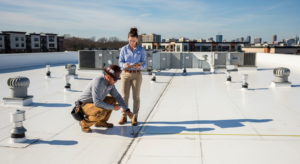
A professional inspection from a licensed commercial roofing contractor is non-negotiable for serious claims. Property managers who skip this step routinely receive settlements 30-50% lower than the actual repair cost. Insurance adjusters are generalists—they inspect residential roofs, vehicles, and interiors all week. A commercial roofing specialist knows exactly what to look for on your specific roof system.
What inspectors examine on commercial flat roofs:
| Roof Type | Key Inspection Points | Common Hidden Damage |
|---|---|---|
| TPO | Membrane seams, weld integrity, flashings | Seam separation, punctures from hail impact |
| EPDM | Membrane adhesion, seam tape condition | Shrinkage, adhesive failure at edges |
| Modified Bitumen | Granule loss, cap sheet condition | Bruising beneath granules, flashing displacement |
| Built-Up Roofing | Surface gravel displacement, membrane splits | Subsurface water intrusion, insulation saturation |
A detailed inspection report strengthens your claim significantly. It should include annotated photos, moisture scan results (if applicable), material identification, and a preliminary scope of repairs. This document gives your insurance company clear evidence that a professional has assessed the damage.
Pro Roofing & Siding offers free commercial roof inspections throughout Metro Atlanta, including Marietta, Kennesaw, Roswell, and Alpharetta. Our GAF-certified inspectors understand what adjusters need to see and how to document damage in a format that facilitates faster approvals. Learn more about our commercial roofing services and inspection process.
Step 3: Contact Your Insurance Company and File the Claim
Once you have documentation and a professional inspection report, contact your insurance company to formally file the claim. Have your policy number ready along with basic property information and the date of the damage event.
Information your insurer will request:
- Policy number and named insured
- Property address and building details
- Date and type of loss (hail, wind, etc.)
- General description of damage observed
- Whether emergency repairs were made
- Contact information for property access
When describing the damage, be factual and thorough—but avoid minimizing the scope. Phrases like “minor damage” or “just a few leaks” can anchor the adjuster’s expectations low before they even visit. Instead, state the facts: “Hail impact damage observed across approximately 15,000 square feet of TPO membrane with active leaks in three tenant spaces.”
Request a commercial adjuster with flat roof experience. Many insurance companies assign adjusters based on availability, not expertise. A polite request for someone experienced with commercial roofing systems can improve your outcome. If you’re in Metro Atlanta, your adjuster should understand the specific challenges of Georgia’s climate on flat roofs.
Expect an initial response within a few business days and an adjuster visit within one to two weeks, depending on claim volume. Major storm events that affect large areas can extend these timelines significantly. Document all communication with your insurance company, including names, dates, and reference numbers.
Step 4: Meet with the Insurance Adjuster on Site
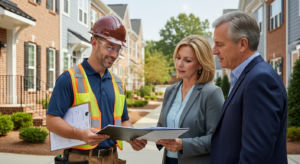
The adjuster’s site visit is the most important moment in your claim process. What they document during this visit determines your initial settlement offer. Having your commercial roofing contractor present during this meeting can significantly impact the outcome.
Why your contractor should attend:
- They can point out damage the adjuster might miss, especially on large commercial roofs
- They speak the technical language adjusters understand
- They can answer material and repair questions on the spot
- Their presence signals you’re taking the claim seriously
Adjusters examining commercial flat roofs often miss subtle damage. Hail bruising on modified bitumen may not be visible from a standing position—it requires hands-and-knees inspection. Seam damage on TPO membranes might appear intact visually but fail under moisture testing. HVAC curbs and penetration flashings frequently sustain damage that’s overlooked without close examination.
Respectfully advocate for a complete assessment. If the adjuster seems to be rushing or skipping areas, politely ask them to examine specific sections your contractor identified. Provide copies of your contractor’s inspection report and photos. You’re not being adversarial—you’re ensuring the adjuster has complete information.
Take notes during the visit. Document which areas the adjuster examined, what they photographed, and any comments they make about coverage or damage assessment. Request a copy of their report once completed. If the adjuster’s findings differ significantly from your contractor’s assessment, you’ll need this documentation for any dispute resolution.
Step 5: Review the Settlement and Negotiate if Needed
After the adjuster’s visit, your insurance company will issue a settlement offer. This document requires careful review—initial offers on commercial roof claims are frequently lower than actual repair costs. Understanding the components of your settlement helps you identify where to push back.
Key settlement terms to understand:
| Term | Definition | Impact on Your Claim |
|---|---|---|
| Actual Cash Value (ACV) | Replacement cost minus depreciation | Initial payment; often 40-70% of total |
| Replacement Cost Value (RCV) | Full cost to repair/replace with like materials | Paid after repairs completed (if RCV policy) |
| Depreciation | Reduction based on roof age/condition | Recoverable on RCV policies after completion |
| Deductible | Your out-of-pocket before insurance pays | Subtracted from settlement amount |
Common reasons commercial roof claims are underpaid include incomplete damage assessment, incorrect material pricing, and failure to account for code upgrades required by current building standards. If your contractor’s estimate exceeds the insurance settlement, you have grounds to request a supplement.
Submit a supplement request with your contractor’s detailed estimate, additional documentation, and a clear explanation of what the original assessment missed. Most supplement requests require supporting evidence—photos of additional damage, material specifications, and labor rate justification. Our roof insurance claim assistance team handles these negotiations regularly for Metro Atlanta commercial clients.
If your supplement is denied or the settlement remains inadequate, you can request a re-inspection with a different adjuster or pursue your policy’s dispute resolution process. Georgia law provides property owners with rights to challenge unfair claim denials, including appraisal processes and legal remedies.
How a Commercial Roofing Contractor Supports Your Claim
The right commercial roofing contractor does far more than repair your roof—they serve as your partner throughout the entire insurance claim process. For property managers juggling multiple responsibilities, this support can mean the difference between a fair settlement and a drawn-out battle with your insurance company.
Insurance liaison services property managers rely on:
- Scheduling and attending adjuster meetings on your behalf
- Preparing documentation packages that meet insurance requirements
- Communicating directly with adjusters to resolve scope disputes
- Providing supplemental estimates when initial settlements fall short
Experienced commercial contractors prepare scope-of-work documents that align with Xactimate pricing—the software most insurance companies use to estimate repairs. When your contractor’s estimate speaks the same language as the adjuster’s system, disputes decrease and approvals accelerate.
Pro Roofing & Siding has worked with every major insurance carrier on commercial claims throughout Metro Atlanta. Our team understands policy language, adjuster expectations, and the documentation that gets claims approved. We’ve helped property managers in Cobb County, apartment owners in Gwinnett, and HOA boards across Cherokee County recover full and fair settlements for storm-damaged commercial roofs.
We work directly with adjusters to resolve disputes faster—often before they escalate to formal supplements. This saves you time and gets your property restored sooner, minimizing tenant disruption and potential business interruption losses.
Why Choose Pro Roofing & Siding for Commercial Roof Insurance Claims?
When your commercial property needs storm damage restoration, you need a contractor with the expertise and track record to handle both the roof and the insurance process. Pro Roofing & Siding brings both to every commercial project in Metro Atlanta.
4.8-star rated with 282+ reviews from commercial and residential clients across Cobb, Cherokee, and Gwinnett Counties. Our reputation is built on honest assessments, quality workmanship, and claims expertise that gets results.
GAF Master Elite certified—a designation held by only 3% of roofing contractors nationwide. This certification requires proven installation expertise, ongoing training, and commitment to quality standards. For commercial clients, it means your roof is installed correctly the first time with manufacturer-backed warranties.
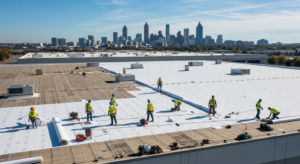
Full-service commercial roofing including TPO, EPDM, modified bitumen, and built-up roofing systems. We handle everything from emergency tarping to complete roof replacement, working with your insurance company throughout the process.
Metro Atlanta local expertise—we know Georgia’s weather patterns, building codes, and insurance landscape. When we document storm damage, adjusters recognize the thoroughness and accuracy that comes from years of local experience.
Frequently Asked Questions
What types of commercial roof damage are covered by insurance in Georgia?
Most commercial property insurance policies cover sudden, accidental damage from hail, wind, fallen trees, fire, and severe storms. Coverage typically excludes damage from gradual wear, deferred maintenance, or neglect. Your specific policy language determines exact coverage—some policies exclude certain roof types or limit coverage based on roof age. Review your policy’s declarations page and exclusions section, or ask your insurance agent for clarification before filing a claim.
How long do I have to file a commercial roof insurance claim in Georgia?
Most commercial property policies require claims to be filed within one year of the damage event, though some policies specify shorter timeframes. Georgia law also imposes statutes of limitation on insurance claims. Check your policy’s “duties after loss” section for specific deadlines. Filing promptly—within days or weeks of the damage—strengthens your claim by establishing a clear timeline between the weather event and the damage.
Can my commercial roofing contractor meet with the insurance adjuster?
Yes, and they should. Having your contractor present during the adjuster’s inspection ensures all damage is identified and documented properly. Your contractor can point out issues the adjuster might miss, explain technical aspects of your roof system, and provide professional context for repair requirements. This is standard practice in the industry and signals to your insurance company that you’re taking the claim seriously.
What should I do if my commercial roof claim is denied or underpaid?
Start by requesting a written explanation for the denial or underpayment. Review this explanation with your commercial roofing contractor to identify specific points of disagreement. Submit a formal supplement request with additional documentation, contractor estimates, and evidence supporting your position. If the supplement is denied, most policies include appraisal or dispute resolution provisions. In some cases, consulting with a public adjuster or attorney who specializes in insurance claims may be appropriate.
Does filing a commercial roof claim increase my insurance premiums?
Filing a legitimate claim for covered damage may impact your future premiums, but the effect varies by carrier, policy type, and claims history. Some commercial policies include “claim-free” discounts that reset after a claim. However, not filing a valid claim—and paying for major repairs out of pocket—is rarely the cost-effective choice. Discuss premium implications with your insurance agent, but don’t let fear of rate increases prevent you from recovering funds you’re entitled to receive.
Schedule Your Free Commercial Roof Inspection Today
If your commercial property in Metro Atlanta has sustained storm damage—or you suspect damage after a recent weather event—don’t wait to take action. The documentation you gather now directly impacts your insurance settlement. Pro Roofing & Siding provides free commercial roof inspections throughout Cobb, Cherokee, and Gwinnett Counties, including detailed reports designed to support your insurance claim.
Our team will inspect your roof, document any damage, and guide you through the claims process from start to finish. We work directly with insurance adjusters to ensure your property receives a fair assessment and full settlement.
Call (770) 415-2297 today to schedule your free commercial roof inspection. One of our commercial roofing specialists will assess your property, explain your options, and help you understand whether filing a claim makes sense for your situation. No pressure, no obligation—just honest advice from a contractor who’s handled hundreds of commercial claims across Metro Atlanta.
Free Inspection — No Obligation
Book Your Free Commercial Roof Inspection
Ready to protect your property? Fill out the form and our commercial project team will reach out within one business day to schedule your complimentary inspection — no obligation, no pressure.
- ✓ Licensed & insured commercial roofing crew
- ✓ Detailed written assessment provided
- ✓ Serving Metro Atlanta & surrounding counties